Hair transplant revision
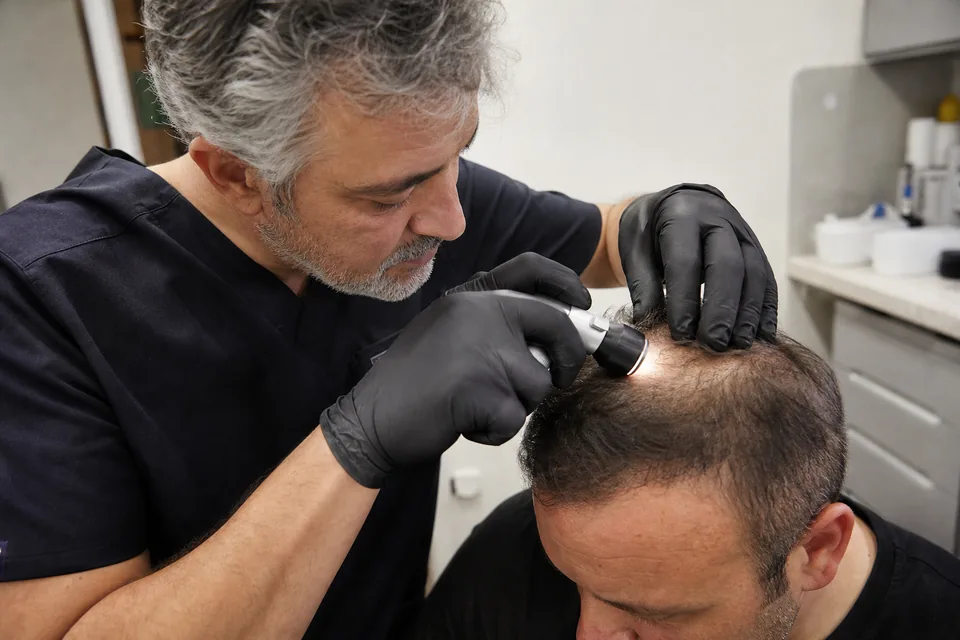
Hair transplant revision is surgery to repair an earlier transplant that looks unnatural, too thin or scarred. Surgeons may remove or redirect badly placed grafts, add density, soften a harsh hairline or camouflage donor scars. Revision is harder than a first operation, so the surgeon's experience matters more than the price.
- Common reasons
- Pluggy hairline, low density, scars, wrong angles
- Wait before revision
- Usually at least 12 months after the first surgery
- Main limit
- How much donor supply is left
Problems revision surgery can address
Each problem calls for a different approach. A surgeon examines the scalp before suggesting one.
Pluggy or doll like hairline
Old plug grafts or large units at the front can be removed, divided and replaced with single hair grafts. See hairline transplant for how a natural line is built.
Low density
If growth was thinner than planned, a second session can add grafts between existing ones, as long as donor supply allows.
Wrong angles or direction
Hairs that stick up or grow the wrong way may be extracted and replanted, or covered with new grafts at the right angle.
Linear donor scar
A strip scar from older surgery can be camouflaged with grafts placed into it. Read FUE vs FUT for why strip scars happen.
Overharvested donor area
A patchy, thin back of the scalp is the hardest problem. Options may include scalp micropigmentation or body hair, and sometimes the honest answer is to leave it.
The process
How a revision is planned
Revision starts with understanding what went wrong before anyone touches the scalp again.
-
01
Wait for the result to mature
Most surgeons ask you to wait at least 12 months after the first surgery, as growth can keep improving until then.
-
02
Gather records
Bring the graft count, technique and any photos from your first surgery. They help the new surgeon judge what is left.
-
03
Assess the donor area
The surgeon measures how many grafts remain safely available. This sets what is possible.
-
04
Agree on priorities
With limited donor supply, the front usually comes first. You decide together which problems matter most.
-
05
Repair in stages
Complex cases may need more than one session, spaced months apart.
Why revision costs more and takes longer
Revision surgery involves working around scar tissue, uneven grafts and limited donor hair. Each graft placement needs more thought, and removing old grafts adds time. Clinics often charge more per graft or set a separate fee for repair work.
Choosing a revision surgeon on price is risky, because every graft spent badly cannot be recovered. Look for a surgeon who openly discusses repair cases and explains limits as clearly as possibilities.
- Scar tissue and old grafts make placement slower
- Donor supply is often reduced
- Extraction of old grafts adds time
- Several sessions may be needed
Questions for a revision surgeon
Ask these during the consultation. Clear answers are a good sign.
- How often do you perform repair work, compared with first surgeries?
- How many grafts can my donor area still give safely?
- Will you remove or redirect any old grafts?
- Who will extract and place the grafts during my session?
- What can realistically be improved, and what cannot?
- Can I see consented repair cases you have done?
Free for patients
Ask surgeons about your repair case
Send photos of your current result and details of your first surgery. Clinics that do repair work reply in writing. You can also compare clinics on the best hair transplant clinics guide or go straight to get quotes.
Questions
Frequently asked questions
Can a bad hair transplant be fixed?
Many problems can be improved, such as a pluggy hairline, low density or a visible strip scar. How much is possible depends mostly on the donor hair you have left and on the surgeon's repair experience.
How long should I wait before revision?
Most surgeons recommend waiting at least 12 months after the first surgery, and longer for the crown, so the result has fully matured before deciding what to change. Rushing repair work can waste donor hair.
Is revision more expensive than a first transplant?
Often yes, per graft, because repair work is slower and more complex. Some clinics set a separate fee. Ask for the graft count and total price in writing. Price should come second to repair experience.
Can old grafts be removed?
Yes, badly placed grafts can often be extracted with FUE and reused elsewhere, or the area can be covered. The right choice depends on angle, size and position. A surgeon explains the options after an examination.
What if my donor area is depleted?
Options shrink, but may include scalp micropigmentation, body hair grafts or careful use of remaining donor hair. A surgeon may also advise against more surgery. An honest answer is worth more than an optimistic one.